Skip to content
sudopicks
esc

Radxa ROCK 5C vs Raspberry Pi 3 Model A+

Researched, not hands-on tested.How we review ›

all judged against single-board computers at a similar price

The Radxa ROCK 5C and Raspberry Pi 3 Model A+ both score 6.5/10 overall.

The Radxa ROCK 5C leads on performance, storage, I/O and networking and value.

The Raspberry Pi 3 Model A+ leads on software support.

The biggest difference is software support, where the Raspberry Pi 3 Model A+ scores 10/10 to the Radxa ROCK 5C's 5/10.

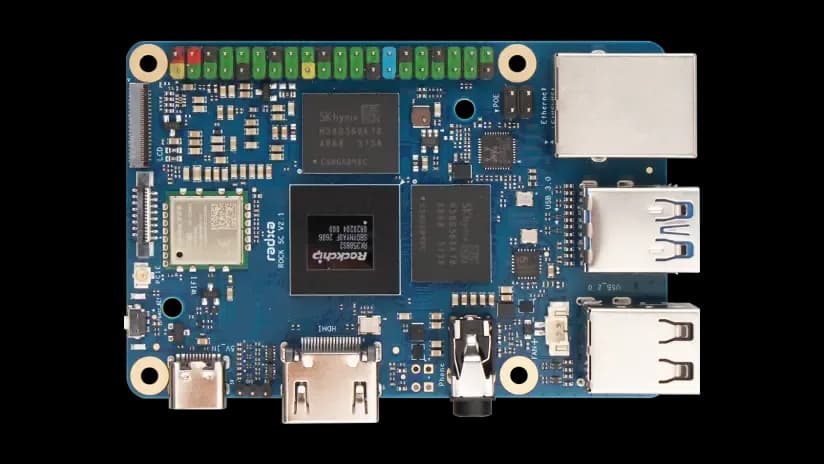
Radxa ROCK 5C

Radxa ROCK 5C

6.5/10verdict: good, not the best

The ROCK 5C is for homelabbers and developers who want a lot of CPU and RAM in a small board. It suits people who are happy to follow Radxa's own Debian and Android images or the third-party systems listed for it. It is a weaker fit if you want native M.2 storage.

Check price at Amazon UK (opens in a new tab, affiliate link)

Affiliate link. As an Amazon Associate I earn from qualifying purchases. Details
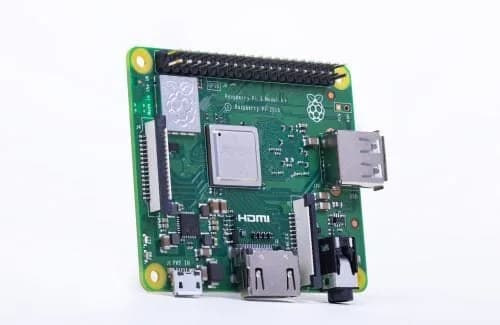
Raspberry Pi 3 Model A+

Raspberry Pi 3 Model A+

6.5/10verdict: good, not the best

The Raspberry Pi 3 Model A+ is for people who want a small, low-power board for a single, light job. It suits wireless projects that use the 40-pin GPIO header, a display or a camera. It is a poor fit for anyone who needs wired networking, several USB devices or much memory.

Typically about £22.86 in the UK when we researched itCheck price at Amazon UK (opens in a new tab, affiliate link)

Affiliate link. As an Amazon Associate I earn from qualifying purchases. Details

Scores, criterion by criterion

CriterionWeightRadxa ROCK 5CRaspberry Pi 3 Model A+
Software support30%5/1010/10
Performance25%9/105/10
Storage15%5/104/10
I/O and networking15%6/105/10
Value15%7/106/10
Overall6.5/106.5/10

Specifications

SpecRadxa ROCK 5CRaspberry Pi 3 Model A+
Processor (SoC)Rockchip RK3588S2Broadcom BCM2837B0, quad-core Cortex-A53 64-bit SoC at 1.4 GHz
Memory4GB, 8GB, 16GB or 32GB; V1.1 uses LPDDR4X, V2.1 uses LPDDR5512MB LPDDR2 SDRAM
Storage options1x eMMC connector, 1x microSD card slot, no SPI flash; no native M.2 slot; PCIe 2.1 1-lane via FPC connectorMicro SD card slot for OS and data; no onboard eMMC or M.2/NVMe connector found in sources
NetworkingGigabit Ethernet (PoE via optional HAT), WiFi 6, BT 5.4 with external antenna connector2.4GHz and 5GHz 802.11b/g/n/ac wireless LAN, Bluetooth 4.2/BLE; no Ethernet port
GPIO40-pin header, Raspberry Pi-style layout, 3.3V logic, up to 27 GPIOExtended 40-pin GPIO header
Video outputs1x HDMI 2.1 up to 8K, 1x MIPI DSI up to 2KOne full-size HDMI port, DSI display port, CSI camera port, 4-pole stereo/composite port
Power input5V via USB Type-C; at least 10W recommended, 25W with full USB and PCIe load5V/2.5A DC via micro USB, or 5V DC via GPIO header

Strengths and weaknesses

Radxa ROCK 5C

  • + Eight-core RK3588S2 with 6 TOPS NPU
  • + RAM options from 4GB up to 32GB
  • + Raspberry Pi-style 40-pin header
  • − No native M.2 slot; microSD bottlenecks storage
  • − No power supply in the box
  • − PCIe drive stays powered when board is off

Skip it if:

  • Buyers who want a native M.2 NVMe slot on the board
  • Buyers who want a power supply included in the box
Read the full Radxa ROCK 5C review ›

Raspberry Pi 3 Model A+

  • + Compact board with low idle power draw
  • + Dual-band Wi-Fi and Bluetooth 4.2 built in
  • + Extended 40-pin GPIO header plus HDMI, DSI and CSI ports
  • − No Ethernet port; wireless networking only
  • − Single USB 2.0 port limits peripherals
  • − 512MB RAM and micro SD only

Skip it if:

  • Anyone who needs a wired Ethernet connection for a server or network appliance
  • Buyers who plan to run heavier apps or several services at once
  • People who need more than one USB port or storage beyond a micro SD card
Read the full Raspberry Pi 3 Model A+ review ›

More comparisons

Compare all single-board computers · Best single-board computers