Skip to content
sudopicks
esc

Khadas VIM3 vs Radxa ROCK 5C

Researched, not hands-on tested.How we review ›

all judged against single-board computers at a similar price

The Khadas VIM3 scores 6.6/10 overall, ahead of the Radxa ROCK 5C at 6.5/10.

The Khadas VIM3 leads on software support, storage and I/O and networking.

The Radxa ROCK 5C leads on performance and value.

The biggest difference is storage, where the Khadas VIM3 scores 8/10 to the Radxa ROCK 5C's 5/10.

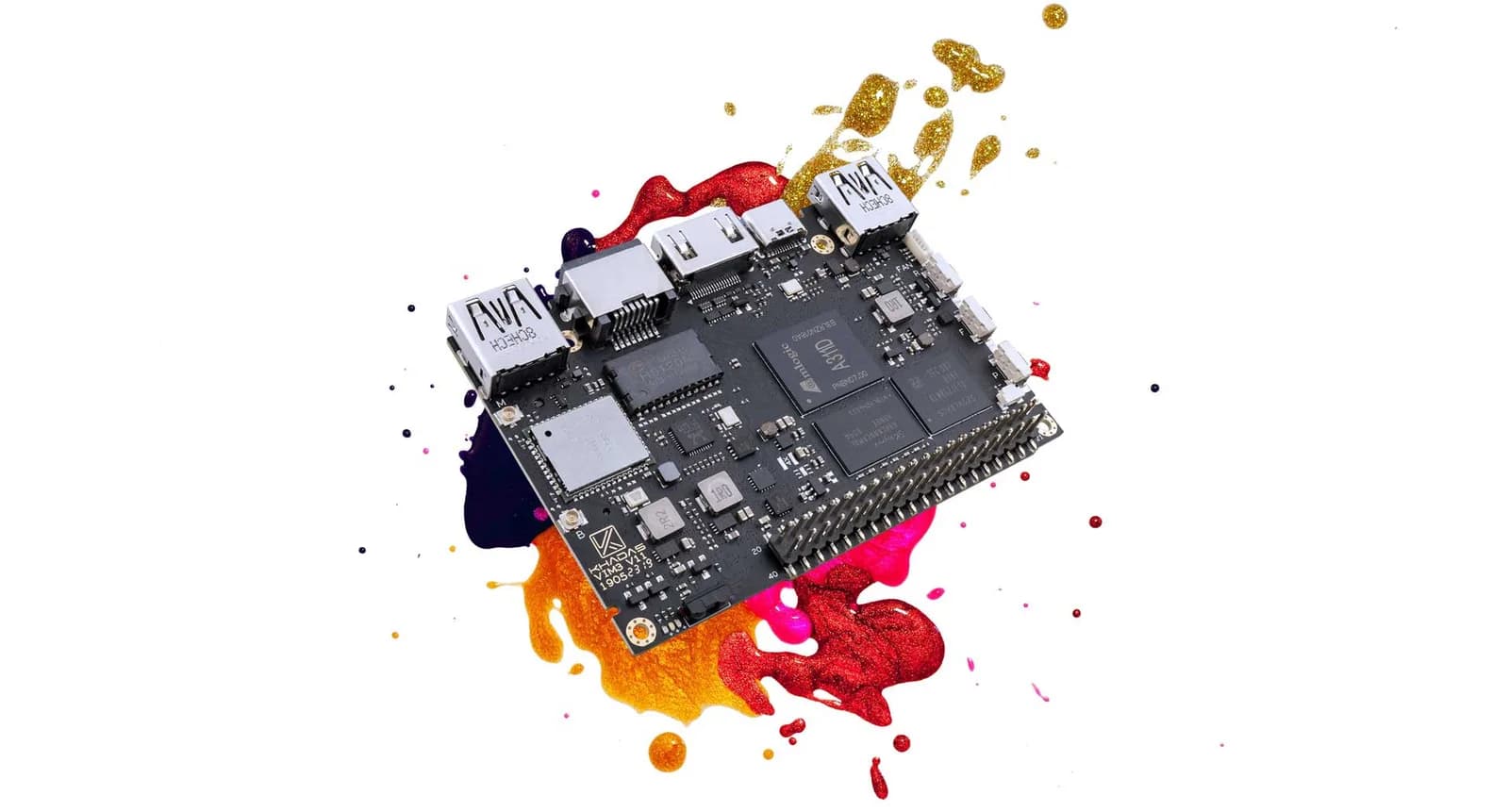
Khadas VIM3

Khadas VIM3

6.6/10verdict: buy

The Khadas VIM3 is for tinkerers who want a six-core Arm board with NVMe support and a 40-pin header. It suits media, display and embedded projects where the NPU and flexible storage matter. It is less suited to anyone who wants a board that runs cool with no extra cooling.

Check price at Amazon UK (opens in a new tab, affiliate link)

Affiliate link. As an Amazon Associate I earn from qualifying purchases. Details
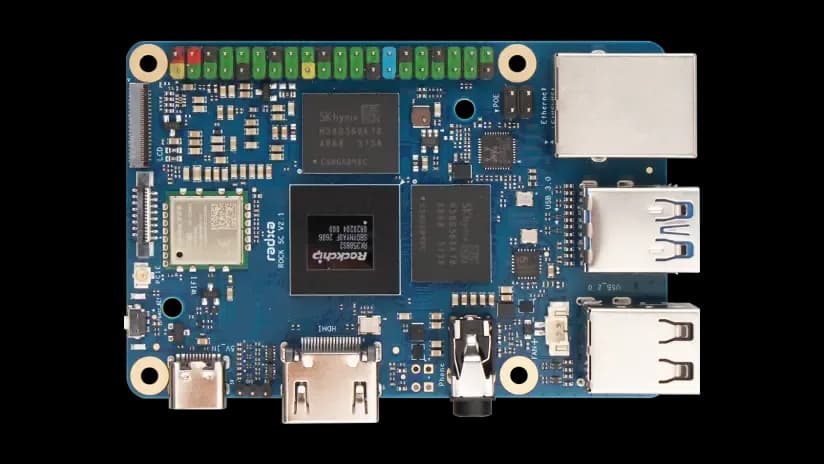
Radxa ROCK 5C

Radxa ROCK 5C

6.5/10verdict: good, not the best

The ROCK 5C is for homelabbers and developers who want a lot of CPU and RAM in a small board. It suits people who are happy to follow Radxa's own Debian and Android images or the third-party systems listed for it. It is a weaker fit if you want native M.2 storage.

Check price at Amazon UK (opens in a new tab, affiliate link)

Affiliate link. As an Amazon Associate I earn from qualifying purchases. Details

Scores, criterion by criterion

CriterionWeightKhadas VIM3Radxa ROCK 5C
Software support30%6/105/10
Performance25%7/109/10
Storage15%8/105/10
I/O and networking15%7/106/10
Value15%5/107/10
Overall6.6/106.5/10

Specifications

SpecKhadas VIM3Radxa ROCK 5C
Processor (SoC)Amlogic A311D, four Cortex-A73 cores at 2.2GHz and two Cortex-A53 cores at 1.8GHz, with 5 TOPS NPURockchip RK3588S2
Memory2GB or 4GB LPDDR4/LPDDR4X4GB, 8GB, 16GB or 32GB; V1.1 uses LPDDR4X, V2.1 uses LPDDR5
Storage optionseMMC 5.1 16GB or 32GB, micro-SD slot, M.2 2280 socket for NVMe (PCIe 2.0 x1)1x eMMC connector, 1x microSD card slot, no SPI flash; no native M.2 slot; PCIe 2.1 1-lane via FPC connector
NetworkingGigabit Ethernet with Wake-on-LAN; AP6398S 802.11a/b/g/n/ac 2x2 Wi-Fi and Bluetooth 5.0Gigabit Ethernet (PoE via optional HAT), WiFi 6, BT 5.4 with external antenna connector
GPIO40-pin GPIO header, 2.54mm pitch40-pin header, Raspberry Pi-style layout, 3.3V logic, up to 27 GPIO
Video outputsHDMI with CEC, MIPI-DSI display interface, touch-panel connector1x HDMI 2.1 up to 8K, 1x MIPI DSI up to 2K
Power inputVIN connector 5–12V; USB-C port 5–20V USB Power Delivery input5V via USB Type-C; at least 10W recommended, 25W with full USB and PCIe load

Strengths and weaknesses

Khadas VIM3

  • + M.2 NVMe socket alongside eMMC and microSD
  • + Six-core A311D with NPU; owners praise efficiency
  • + Several official OS images, including mainline Linux
  • − Owners report heat and instability without a fan
  • − Power delivery quirks reported, including bootloops and shutdowns
  • − RAM stops at 4GB

Skip it if:

  • Buyers who want a fanless, cool-running board with no extra cooling
  • Anyone needing more than 4GB of RAM
  • Builders who can't test and choose their power supply carefully
Read the full Khadas VIM3 review ›

Radxa ROCK 5C

  • + Eight-core RK3588S2 with 6 TOPS NPU
  • + RAM options from 4GB up to 32GB
  • + Raspberry Pi-style 40-pin header
  • − No native M.2 slot; microSD bottlenecks storage
  • − No power supply in the box
  • − PCIe drive stays powered when board is off

Skip it if:

  • Buyers who want a native M.2 NVMe slot on the board
  • Buyers who want a power supply included in the box
Read the full Radxa ROCK 5C review ›

More comparisons

Compare all single-board computers · Best single-board computers