TP-Link EAP110
~£38.35typical UK price when we researched itAffiliate link. As an Amazon Associate I earn from qualifying purchases. Details
TP-Link EAP110 review
Researched, not hands-on tested.How we review ›
by SudoPicks Research · editor Paul HR · published 29 Oct 2026 · updated 29 Oct 2026
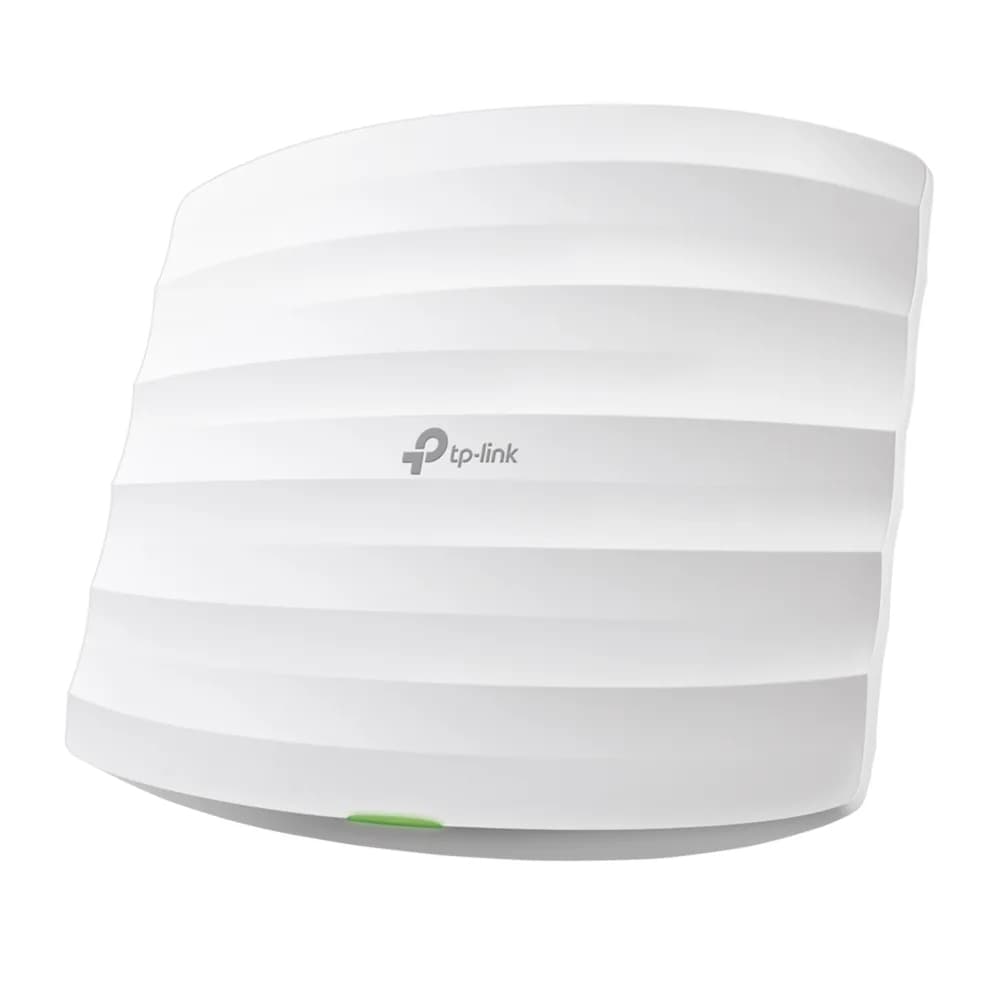
The TP-Link EAP110 is for small sites that want Omada-managed Wi-Fi with VLAN-tagged SSIDs and have modest wireless needs. It suits light jobs such as a guest or IoT network, where 2.4 GHz at up to 300 Mbps is enough.
15th of 15 Wi-Fi access points we've reviewedAffiliate link. As an Amazon Associate I earn from qualifying purchases. Details
New to Wi-Fi access points? What they are and what to look for
An access point is a Wi-Fi transmitter that connects to your network with a cable, usually mounted on a ceiling or wall. Several of them give fast, even Wi-Fi throughout a building.
Do you need a Wi-Fi access point? Worth it if you can run Ethernet cables to where you need Wi-Fi. If you can't, a mesh router system is easier.
What to look for
- Wi-Fi 6 or newer
- Power over Ethernet (PoE), so it doesn't need a plug socket
- Whether it can be managed without the maker's cloud account
Unsure about a word? Jargon explained
How the 4.0 adds up
Our Wi-Fi access points rubric- Wi-Fi standard and bands25% of score
- Uplink and power20% of score
- Management20% of score
- Software and security20% of score
- Value15% of score
Against the 15 Wi-Fi access points we've reviewed
bar = the range of all 15 · dot = this one · better →
- Overall score 4.0/1015th of 15
- Price £38.352nd cheapest
- Value for money Better value than most3rd best of 15
Support and features
| Power draw | 2.8W under load (manufacturer's figure, source) |
|---|---|
| Software updates | No end-of-support or end-of-life date announced in the sources read. |
- Works without the cloud
Measured by owners
No owner readings yet. If you own one and have a smart plug or power meter, a reading takes a minute and helps everyone else.
Security and compatibility
| Latest firmware or software | August 2025no update for over a year source |
|---|---|
| Known security issues | None found in public advisories. That's a good sign, not a guarantee. |
| Update record | No EAP110-specific CVE or TP-Link advisory was found; the download page lists V4.80 dated 08-13-2025, though that date is unconfirmed against the build date 20250709. |
Pros and cons
+ pros
- Omada controller support with web UI and cloud access
- Up to 8 SSIDs with SSID-to-VLAN mapping
- Client wireless isolation, MAC filtering and RADIUS listed
− cons
- 2.4 GHz only, Wi-Fi 4, 300 Mbps maximum
- Fast Ethernet uplink limited to 100 Mbps
- WPA3 absent from the security list
Price history
Price history appears here once we have tracked this product for a few days.
The full review
Where it fits
The EAP110 is a ceiling or wall access point in the Omada range. It uses 802.11b/g/n (Wi-Fi 4) on 2.4 GHz only, with a top rate of 300 Mbps. It has one Fast Ethernet port and takes 24V passive PoE. The pitch is managed Wi-Fi with business-style features rather than speed.
That shapes who it suits. It makes sense for a single-purpose network, such as a guest SSID, a set of IoT devices or a shop floor with light traffic. It is a poor choice as the main access point for a busy office or a household that streams a lot.
Wi-Fi and radio
There is no 5 GHz radio. The spec sheet lists 2.4 GHz: Yes and 5 GHz: No. With a single band, every client shares the same 2.4 GHz channel space. The maximum data rate is 300 Mbps on that band.
The hardware has two internal 4 dBi omni-directional antennas. Transmit power is listed at 21 dBm (CE). Receiver sensitivity is listed as -71 dBm at 300M, improving to -96 dBm at 1M. Automatic channel selection, WMM, QoS and rate limiting are all listed. These are useful controls, but they work within a single 2.4 GHz band.
Wired connection and power3/10
The uplink is one 10/100 Ethernet port. That is 100 Mbps, below the 300 Mbps top wireless rate, so the wired side is the lower figure on paper. For light use that matters less. It does mean the port is a ceiling if you push the radio hard.
Power is 24V passive PoE. The current maximum consumption is 2.8 W. An older V1 datasheet lists 7.7 W, which conflicts with that figure, so check the revision you are buying if power budgeting matters. The passive PoE input means you need to match it with a suitable injector or switch arrangement.
Mounting is straightforward. Ceiling and wall kits are included. There is a Kensington lock slot, a reset button and a single power LED. The unit measures 189.4 mm wide and 172.3 mm deep, and it comes in white.
Management and VLANs8/10
This is where the EAP110 does best. It works with an Omada hardware controller or the software controller. Cloud access goes through the OC300, OC200 or the software controller. A web UI over HTTP or HTTPS is also listed, and syslog is supported.
The access point supports up to 8 SSIDs, with SSID-to-VLAN mapping. That lets you put staff, guest and device traffic on separate VLANs from one radio. Wireless isolation between clients is listed, along with a captive portal. Controller support and VLAN mapping are the strongest items in the specification.
Security4/10
The listed modes are WEP, WPA/WPA2-Personal, WPA/WPA2-Enterprise, 802.1X, MAC filtering, captive portal and rogue AP detection. RADIUS and ACL support are listed too. HTTPS, SSH and SNMP appear among the security and management items.
WPA3 is not in the security list. WEP is still offered, in 64-bit, 128-bit and 152-bit forms. If your policy requires WPA3, this model does not meet it on paper. With WPA2-Enterprise and 802.1X available, a site with a RADIUS server can still run authenticated access.
Bottom line
The EAP110 combines controller-based management and VLAN-tagged SSIDs with a Wi-Fi 4, 2.4 GHz-only radio and a 100 Mbps port. It fits where the management features matter more than throughput. Where you need speed, a second band or WPA3, the specifications point elsewhere.
Who should skip it
- Anyone who needs a 5 GHz band or speeds beyond 300 Mbps
- Buyers who require WPA3 on their wireless network
- Sites that want a gigabit or faster wired uplink
Full specifications
| Wi-Fi standard | 802.11b/g/n (Wi-Fi 4), up to 300 Mbps |
|---|---|
| Bands and speed class | 2.4 GHz only (2.4-2.4835 GHz) |
| Uplink port | 1 x Fast Ethernet (RJ-45), 10/100 Mbps |
| Power (PoE class) | 24V passive PoE; maximum power consumption 2.8 W |
| Management | Omada hardware or software controller, web UI over HTTP/HTTPS; cloud access via OC300, OC200 or software controller |
| Mounting | Ceiling or wall mounting, kits included |
✓ Specs checked against the maker's data sheet.
Sources
- TP-Link UK EAP110 product page
- TP-Link US EAP110 product details
- TP-Link India EAP110 ceiling mount AP page
- TP-Link India EAP110 comparison
- EAP110 V1 datasheet
- Novatech EAP110 listing
- Amazon UK EAP110 listing
- TP-Link community forum thread
- Icecat data sheet: TP-Link EAP110 wireless access point 300 Mbit/s White Power over Ethernet (PoE)