PowerWalker Basic VI 2200 STL
Price unavailable right nowAffiliate link. As an Amazon Associate I earn from qualifying purchases. Details
PowerWalker Basic VI 2200 STL review
Researched, not hands-on tested.How we review ›
by SudoPicks Research · published 24 Oct 2026 · updated 24 Oct 2026
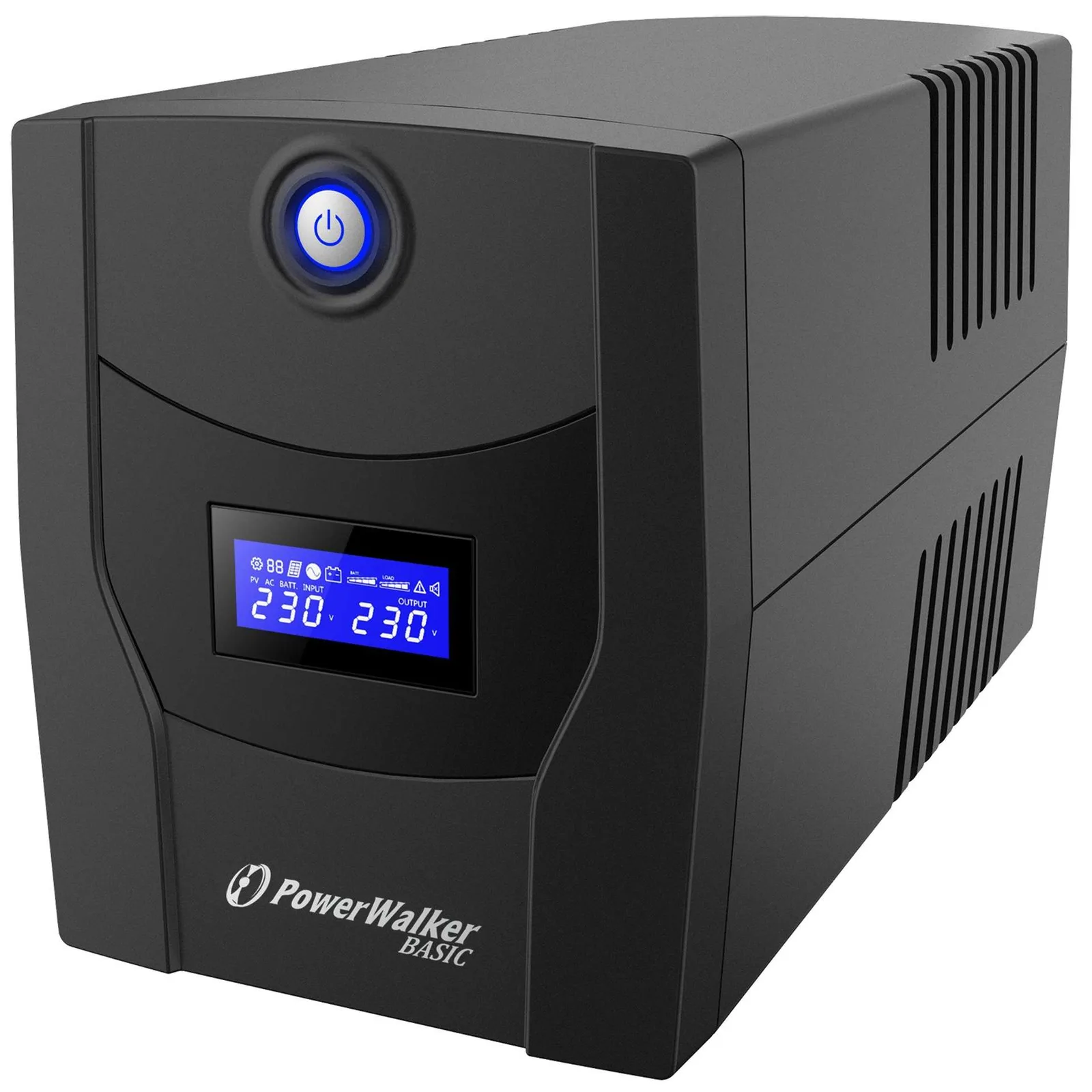
The PowerWalker Basic VI 2200 STL is a line-interactive UPS for people who want a high power rating for a small stack of network and storage gear. It suits a NAS, router and switch setup that needs USB-signalled shutdown more than long battery time.
2nd of 10 UPS units we've reviewedAffiliate link. As an Amazon Associate I earn from qualifying purchases. Details
How the 5.9 adds up
Our UPS units rubric- Capacity20% of score
- Topology and waveform25% of score
- NAS and server integration25% of score
- Runtime and battery15% of score
- UK outlets and build15% of score
Against the 10 UPS units we've reviewed
bar = the range of all 10 · dot = this one · better →
- Overall score 5.9/102nd of 10
- Price £188.859th cheapest
- Value for money 3.1 per £1009th of 10
Running costs and support
| Power draw | 52W idle (measured by owners or reviewers, source) |
|---|---|
| Software updates | No end date announced source |
- NAS shutdown
Pros and cons
+ pros
- 1320W rating (2200VA at 0.60 power factor)
- USB with HID support listed
- Line-interactive topology
− cons
- Simulated sine wave output
- Only 3.9 minutes at half load
- Model identity unconfirmed on retailer listing
Price history
Price history appears here once we have tracked this product for a few days.
The full review
Where it fits
The Basic VI 2200 STL is a line-interactive UPS rated at 2200VA / 1320W, with an output power factor of 0.60. It has four outlets and a USB port with HID support. The battery is a pair of 12V / 9Ah units.
That profile points at a small rack or desk setup: a NAS, a router, a switch and perhaps a mini PC. The aim is to ride out short dips and shut things down cleanly, not to keep a stack running for long.
Capacity8/10
Capacity is the headline figure in the specification. The unit is rated at 2200VA and 1320W, with an output power factor of 0.60. The two figures differ because of that power factor. If you size a load by watts, use the 1320W figure, not the VA figure. The research gives no figures for the draw of specific devices, so add up your own equipment's wattage before relying on the rating.
Topology and waveform5/10
The research lists the topology as line-interactive. It gives no other operating mode, such as online double-conversion.
The output on battery is a simulated sine wave, not pure sine. That is the main compromise in the specification. If your equipment's manual asks for pure sine output, check it before buying. The research doesn't say which devices are affected, so this review makes no claim about specific hardware.
NAS and server integration7/10
The unit lists USB with HID support. The research does not name Synology, QNAP, TrueNAS or NUT as confirmed compatible, so check your platform's supported-UPS list before relying on it.
The listed specifications don't mention a network management card or slot. The research also doesn't say how many machines one unit can signal over USB, so confirm that before planning a setup with several machines.
Runtime and battery4/10
Runtime is the weakest area. The listed figure is 3.9 minutes at half load. That is enough for a controlled shutdown if software is configured properly. It is not enough to ride out anything longer than a brief outage while keeping equipment running.
The research gives no runtime figure for lighter loads, so a NAS-sized load may last longer, but it doesn't say by how much. Recharge time is listed as 8 hours to 90%. The research does not say whether the battery is user-replaceable, so confirm that with PowerWalker if long-term ownership matters.
Outlets and build5/10
The research lists four outlets, in Type F, Type E or Type G. It doesn't say which type a given unit has, so confirm the outlet type on the listing before you buy. The research gives no surge protection detail or warranty terms, so check both on the listing before purchase.
Model identity
One point needs care. The research notes that the Amazon UK listing could not be matched to this specific model by name. The specifications may therefore differ for other PowerWalker 2200 models. Check the model name on the product you receive or the page you order from.
Verdict
This is a high-capacity, line-interactive UPS with USB HID support, aimed at keeping small infrastructure alive long enough to shut down. Its 1320W rating is the headline figure, and the 0.60 power factor explains the gap from the 2200VA number. The simulated sine output and the 3.9-minute half-load runtime are its limits. If you can live with both and the model identity checks out, it fits that job. If your equipment needs pure sine output, or you want long battery time, the specifications point elsewhere.
Who should skip it
- Buyers whose equipment requires pure sine wave output
- Anyone needing long battery runtime at half load
- Buyers who need confirmed NAS compatibility or warranty detail before ordering
Full specifications
| Capacity (VA / W) | 2200VA / 1320W |
|---|---|
| Topology | Line-interactive |
| Output waveform | Simulated sine wave |
| Outlets | Type F, Type E or Type G (4) |
| Runtime at half load | 3.9 minutes at half load |
| USB / network management | USB with HID support |
| Battery | 2 x 12V / 9Ah |
Alternatives
Compare head to head
- PowerWalker Basic VI 2200 STL vs APC Back-UPS Pro BR1600MI ›
- PowerWalker Basic VI 2200 STL vs Eaton 3S Gen2 UPS 3S550B ›
- PowerWalker Basic VI 2200 STL vs APC Back-UPS BE850G2-UK ›
- PowerWalker Basic VI 2200 STL vs APC Back-UPS BX750MI ›
- PowerWalker Basic VI 2200 STL vs APC Easy UPS BV650I ›
- PowerWalker Basic VI 2200 STL vs Tecnoware ERA PLUS 1200 UK (FGCERAPL1202UK) ›