TP-Link Archer AX53
Price unavailable right nowAffiliate link. As an Amazon Associate I earn from qualifying purchases. Details
TP-Link Archer AX53 review
Researched, not hands-on tested.How we review ›
by SudoPicks Research · published 24 Oct 2026 · updated 24 Oct 2026
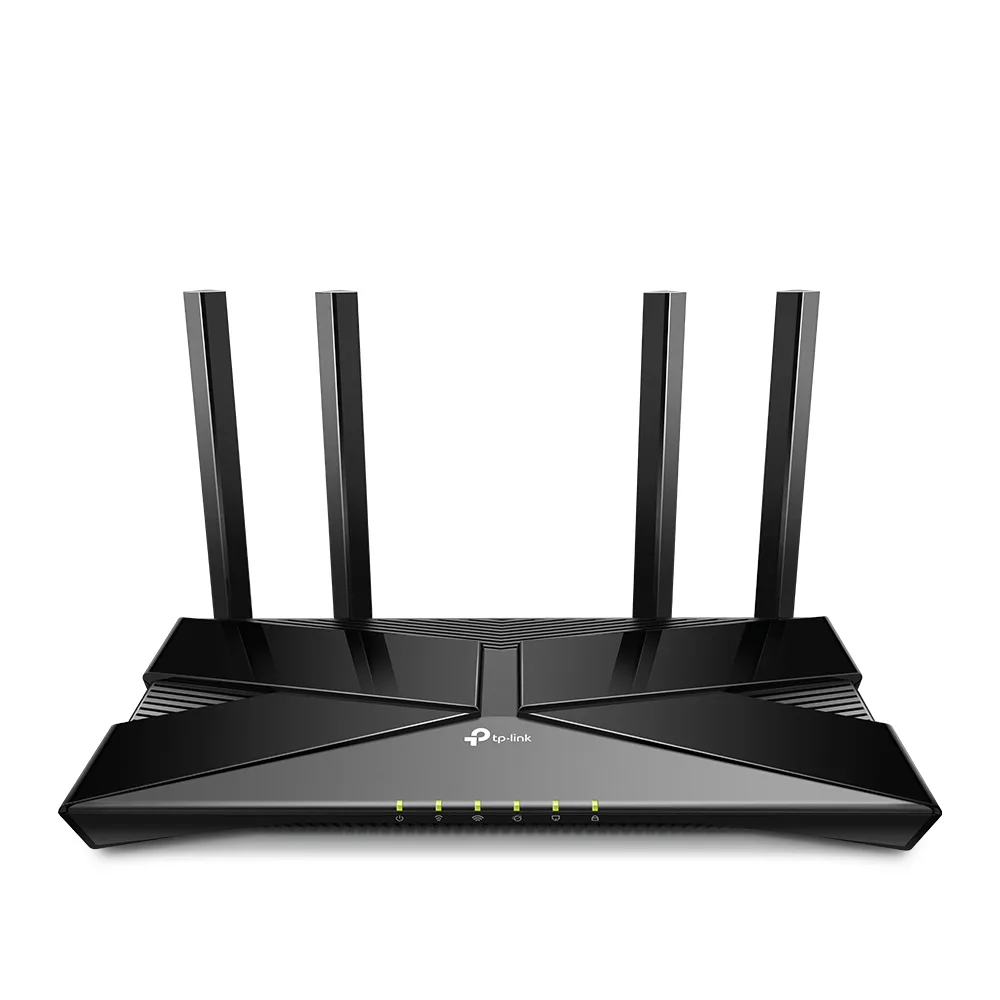
The Archer AX53 is a single Wi-Fi 6 router for people in a small or medium home who want a broad feature list. It suits households that want parental controls, guest networks and a built-in VPN server.
6th of 10 Wi-Fi routers and mesh systems we've reviewedAffiliate link. As an Amazon Associate I earn from qualifying purchases. Details
New to Wi-Fi routers and mesh systems? What they are and what to look for
A router connects your home to the internet and creates your Wi-Fi network. Mesh systems use several units around the house for stronger signal everywhere.
Do you need a Wi-Fi router? Your broadband provider gives you one, but a better router can fix weak Wi-Fi, slow speeds in far rooms and frequent drop-outs.
What to look for
- Wi-Fi 6 or newer
- Mesh if your home is large or has thick walls
- Regular security updates from the maker
Unsure about a word? Jargon explained
How the 5.8 adds up
Our Wi-Fi routers and mesh systems rubric- Wi-Fi standard and bands25% of score
- Wired ports20% of score
- Coverage15% of score
- Software and security25% of score
- Value15% of score
Against the 10 Wi-Fi routers and mesh systems we've reviewed
bar = the range of all 10 · dot = this one · better →
- Overall score 5.8/106th of 10
- Price £59.984th cheapest
- Value for money 9.7 per £1004th of 10
Power use and running costs
Running 24/7 at idle, at 26.32p per kWh (the Ofgem price cap).
- Electricity per year
- £20.75
- 79 kWh
- 3 years, all in
- £122.23
- £59.98 to buy + £62.25 to run
- Against the others
- 4th of 4
- 1st = lowest idle power
- TP-Link Archer C6 AC1200 Router2.6 W£5.99
- MERCUSYS MR80X AX3000 Wi-Fi 6 Router5.5 W£12.68
- GL.iNet Flint 2 GL-MT60005.6 W£12.91
- TP-Link Archer AX53 (this)9 W£20.75
Dashed bars use the maker's figure; solid bars were measured by reviewers or owners.
- TP-Link Archer C6 AC1200 Router£61.76
- MERCUSYS MR80X AX3000 Wi-Fi 6 Router£73.03
- TP-Link Archer AX53 (this)£122.23
- GL.iNet Flint 2 GL-MT6000£191.72
Today's best price, or the typical price when researched. Drives and accessories not included.
Not shown, as no idle figure is published: ASUS RT-BE92U, TP-Link Archer BE3600, eero 7, TP-Link Deco X10, TP-Link Archer AX18, eero 6+.
Running costs and support
| Software updates | Until April 2028. TP-Link's Singapore page lists end of support as 6-Apr-28, but the EOL list shows an end-of-sale date of 7 Jan 2026, so the dates conflict. source |
|---|
- Mesh
- VPN server
Featured in: Best Wi-Fi routers and mesh systems with mesh
Security and compatibility
| Latest firmware or software | February 2026updated in the last year source |
|---|---|
| Known security issues |
|
| Update record | Several 2025 and 2026 CVEs affect older V1 firmware and are fixed in newer builds, but I did not verify every 2026 fix against TP-Link's own advisories. |
| Linux | Partly works on Linux. Only an unofficial, experimental OpenWrt port reports working Ethernet (RTL8367S switch) and 2.4 GHz Wi-Fi (ath11k); no official Linux support was found. source |
Pros and cons
+ pros
- Dual-band AX3000 with 160MHz channels on 5GHz
- WPA3, guest networks, VPN server and IPS included
- Praised for parental controls and the Tether app
− cons
- Gigabit ports only, with no USB port
- Some owners report sluggish interfaces and dropped devices
- OneMesh only works with TP-Link products
Price history
Price history appears here once we have tracked this product for a few days.
The full review
Where it fits
The Archer AX53 is TP-Link's dual-band Wi-Fi 6 router. It ships as a single unit with no mesh nodes in the box. TP-Link rates it for 2-3 bedroom houses and gives it four external antennas. That makes it a router for a typical family home rather than a large property that needs several nodes from day one.
If you want to extend coverage later, it is EasyMesh-compatible and works with OneMesh. One reviewer lists OneMesh being limited to TP-Link products as a drawback, so check what you already own before planning an expansion.
Wi-Fi and speeds
The AX3000 rating splits into 2402 Mbps on 5GHz and 574 Mbps on 2.4GHz. The 5GHz band supports HE160, which is the 160MHz channel width. Those are the headline link rates. They are not what a single device will transfer in practice.
There is no 6GHz band. The router has no Wi-Fi 6E or Wi-Fi 7 support. Owners praise its reliable Wi-Fi 6 performance. One reviewer calls the performance uninspiring, so expect it to do the basics well rather than stand out.
Wired ports5/10
You get one Gigabit WAN port and four Gigabit LAN ports. The research found no 2.5GbE. A single Gigabit WAN port is fine for connections up to that speed. It also means the wired side will not go beyond 1Gbps per port.
There is no USB port, which one reviewer lists as a con. If you wanted to share a drive or printer from the router, this model doesn't offer that.
Software and security6/10
The feature list is long. It covers WPA3, guest networks (one on 5GHz and one on 2.4GHz), and a VPN server supporting OpenVPN and PPTP. As a VPN client it supports OpenVPN and PPTP, with WireGuard on the V2 hardware version. Security extras include an SPI firewall, IPS, DDoS prevention and HomeShield.
That suits a homelab user who wants to dial back into the network with OpenVPN. The research lists the guest networks but doesn't say whether they are isolated from the main network, so check that with the manufacturer if it matters to you. It also doesn't mention VLAN support, so anyone who needs VLANs should check the manufacturer's spec before buying.
Owners praise the robust parental controls and the easy-to-use Tether app. Others say the app and web interface feel sluggish. One owner also reports devices dropping off Wi-Fi and wired connections. That is a single report, but it is worth knowing about if stability matters more than features.
Firmware and subscriptions
TP-Link has not published an end-of-support date for the AX53, and the research found no end-of-life notice. Firmware listings differ by region. The Nordic page shows a V2 build dated 2026-03-05. The Malaysia page shows a 1.0.5 build dated 2026-03-23. The UK page shows a 1.0.3 build dated 2024-03-06. If you buy in the UK, check which hardware version you receive and what firmware is available for it.
One reviewer says a HomeShield-type paywall costs a yearly fee and cannot be managed through the web interface. The snippet doesn't confirm which service the charge applies to. Treat the paid tier as a possibility to check before relying on the advanced security and parental control features.
Verdict
The AX53 is a sensible Wi-Fi 6 router for a smaller home. Its dual-band AX3000 radios, WPA3, guest networks and VPN server are listed in the specifications. With a rated coverage of 2-3 bedrooms and four antennas, it suits a typical house better than a large one. Gigabit-only ports, no USB and TP-Link-only OneMesh limit how far it can grow. Owner reports of sluggish interfaces and dropped devices, plus the unclear paid-tier situation, are the points to weigh against the generous feature list.
What owners report
Recurring themes from public owner feedback, summarised in our own words.
- Owners praise reliable Wi-Fi 6 performance, strong parental controls and the easy-to-use Tether app.
- Some complain the app and web interface are sluggish.
- One owner reports devices dropping off both Wi-Fi and wired connections.
- Reviewers list no USB port, uninspiring performance and TP-Link-only OneMesh as drawbacks.
Who should skip it
- Buyers who need 2.5GbE or faster wired ports
- Anyone wanting Wi-Fi 6E or Wi-Fi 7 and a 6GHz band
- People who want a USB port or a mesh mixing different brands
Full specifications
| Wi-Fi standard | Wi-Fi 6 (802.11ax) |
|---|---|
| Bands and speed class | Dual-band AX3000: 5 GHz 2402 Mbps (802.11ax, HE160); 2.4 GHz 574 Mbps (802.11ax) |
| WAN port | 1x Gigabit WAN (1 Gbps) |
| LAN ports | 4x Gigabit LAN (1 Gbps) |
| Mesh nodes in the box | 0 mesh nodes in box; single router, EasyMesh-compatible and works with OneMesh |
| Rated coverage | Rated for 2-3 bedroom houses (TP-Link Malaysia page); four external antennas |
| Security and VPN features | WPA3; guest networks (one 5 GHz, one 2.4 GHz); VPN server (OpenVPN, PPTP); VPN client (OpenVPN, PPTP, WireGuard on V2); SPI firewall, IPS, DDoS prevention, HomeShield security |
Sources
- TP-Link Malaysia download page
- TP-Link Nordic download page
- TP-Link UK download page
- Archer AX53 datasheet PDF
- TP-Link Baltic product page
- TP-Link Malaysia product page
- TP-Link UK compare page
- TP-Link India product page
- Expert Reviews Archer AX53 review
- Blacktubi review
- TP-Link community forum thread
- Telecare.com.bd retailer listing
- PriceSpy UK listing
- TPCDB power database entry
- e-catalog UK listing